1900s
Optics and acoustics, from the start
The Nobel biography places Raman's earliest work in optics and acoustics during his student years.
Nobel Prize archive ↗Light, looked at differently.
Optics, acoustics and the institutions of research, through a selected record of Raman's scientific work.
The Nobel archive, the original Raman-Krishnan paper and the Raman Research Institute form the spine of this portrait. The discovery is presented with its collaborative context.
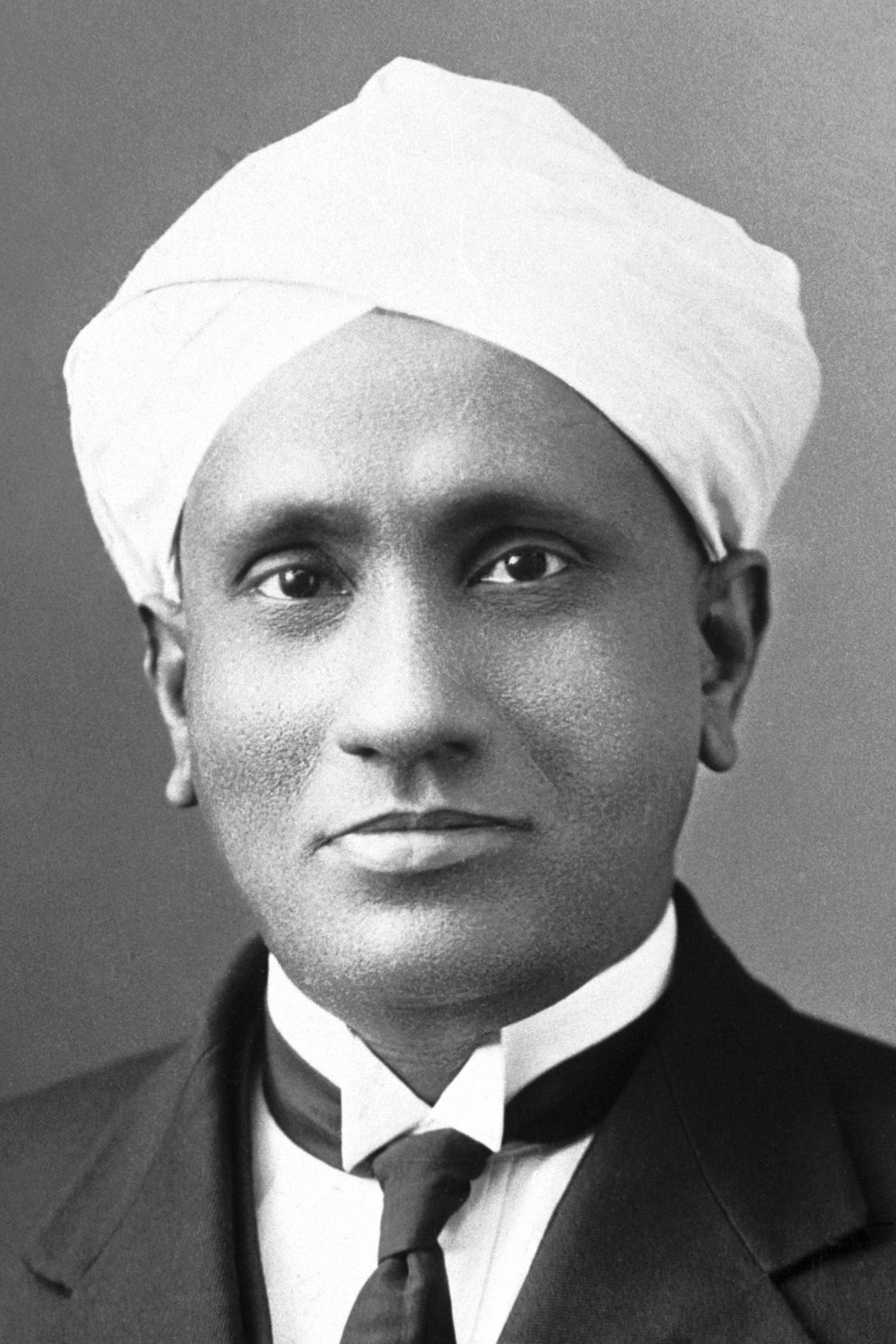
Selected research and institution-building chapters, oldest to newest.
The Nobel biography places Raman's earliest work in optics and acoustics during his student years.
Nobel Prize archive ↗In 1917, he accepted the Palit Chair at Calcutta University, moving into a full-time academic role.
Nobel Prize archive ↗The Nobel biography records his founding of the Indian Journal of Physics in 1926.
Nobel Prize archive ↗Nature published A New Type of Secondary Radiation by C. V. Raman and K. S. Krishnan on 31 March 1928.
Nature ↗Raman received the 1930 Nobel Prize in Physics for the light-scattering work associated with the effect bearing his name.
Nobel Prize archive ↗The Nobel biography records his professorship at the Indian Institute of Science from 1933 to 1948.
Nobel Prize archive ↗The Raman Research Institute records the founding of the Indian Academy of Sciences by Raman in 1934.
Raman Research Institute ↗He founded the Raman Research Institute in 1948 to continue his research after retirement from the Indian Institute of Science.
Raman Research Institute ↗The Nobel biography records a wider experimental curiosity.
His early acoustics work included the maintenance of vibrations and the theory of instruments in the violin family.
Nobel Prize archive ↗The biography records studies of crystal dynamics, diamond, and the optical behaviour of iridescent materials including opal and pearls.
Nobel Prize archive ↗The physiology of human vision appears among the research interests recorded in the Nobel biography.
Nobel Prize archive ↗The original publication and the institute record keep people and institutions in view.
Krishnan is the co-author of the 1928 Nature letter. Its joint authorship is part of this scientific record.
Nature ↗The Nobel biography describes Raman carrying out experiments at the Indian Association for the Cultivation of Science while working in the Finance Department.
Nobel Prize archive ↗RRI records that Raman's institute was initially supported by his own funds and private donations. He directed it until his death in 1970.
Raman Research Institute ↗An original paper, a Nobel lecture and two institutional histories.
Read Nature's publication record and available abstract for the Raman-Krishnan paper. Full-text access may require a subscription.
Nature ↗The Nobel archive lists Raman's Nobel Lecture, delivered on 11 December 1930.
Nobel Prize archive ↗A historical biography of his research and academic work. Its period language is not used to imply he is living.
Nobel Prize archive ↗RRI's own account explains its establishment in 1948 and subsequent institutional history.
Raman Research Institute ↗No sources match. Try another search.
Public sources. Clear boundaries.
This is an independent, non-profit selection of public information about C. V. Raman. The source beside each record supports the claim made here.
Selected source pages were reviewed on 18 November 2026. That is a source-check date, not a claim of complete coverage or an exact spoken date.
Additions in this edition.
Milestones, areas of work and selected original sources brought together for review.